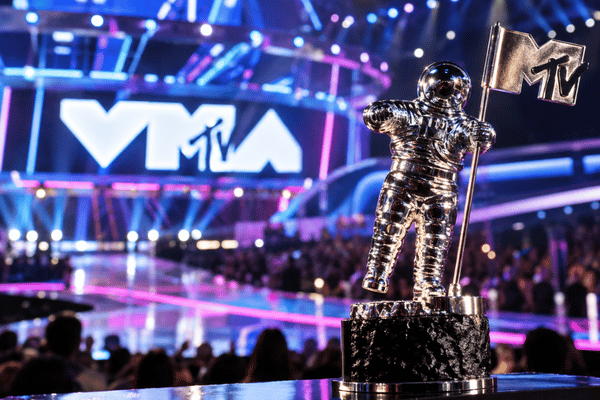

The 2026 MTV Video Music Awards will air live on CBS on Sunday, September 27, at 7:30 p.m. Eastern and 4:30 p.m. Pacific, broadcasting from the Peacock Theater in Los Angeles. In an entertainment landscape increasingly dominated by on-demand viewing, the VMAs remain one of the few award shows built specifically as a live, must-watch television event — and this year’s broadcast has plenty of reasons to earn that attention.
A stacked nomination field. With Madonna leading all nominees at 11 nods and Taylor Swift close behind at 9, followed by Ariana Grande, Sabrina Carpenter, Bruno Mars, PinkPantheress, Zara Larsson and BLACKPINK’s Lisa all in serious contention, the ceremony has a genuinely competitive field across its major categories — the kind of nomination spread that tends to keep viewers engaged throughout the full broadcast rather than only during the final award.
A historic tribute. This year’s Video Vanguard Award goes to Nirvana, more than three decades after the band’s breakthrough reshaped rock music and music video culture alike. Legacy tributes like this typically anchor a broadcast’s most memorable segment, and expect the ceremony to lean into Nirvana’s continued influence across genres well beyond traditional rock.
The two-hour format. Unlike some award shows that have expanded to unwieldy lengths, the VMAs’ two-hour runtime keeps the broadcast tightly paced, mixing award presentations with live performances designed to generate their own moments independent of the actual winners. That pacing has become part of the show’s identity, particularly as it competes for attention against a streaming landscape that rewards shorter, more shareable content.
Why live television still matters here. In a media environment where most entertainment consumption happens on-demand, the VMAs’ insistence on remaining a genuinely live event is part of what continues to set it apart. Performances that go right, or memorably wrong, become instant cultural moments precisely because they’re unfolding in real time rather than edited and released later — a dynamic that’s kept the show relevant even as the broader television landscape has fragmented.
What could make history. Beyond the performances and nominee announcements, this year’s broadcast carries a genuine statistical storyline: both Madonna and Taylor Swift have a realistic path to tying or breaking the record for most VMA wins ever, depending on how the night’s categories break. That kind of stakes-driven subplot gives even casual viewers a clear reason to watch the results unfold live.
How to watch. The ceremony broadcasts live on CBS, with the network’s typical simulcast and streaming options expected to be available for viewers who prefer to watch outside a traditional television setup.
The production side of a live broadcast. Producing a two-hour live show with this many performance slots and award presentations requires a level of precision timing that pre-recorded content simply doesn’t — every transition, performance changeover and acceptance speech has to fit within a fixed broadcast window. That production pressure is part of what gives live award shows their distinct energy, and the VMAs in particular have leaned into that unpredictability as part of the show’s identity rather than trying to engineer it away.
Second-screen viewing and social reaction. Even as the broadcast itself remains a traditional live-television event, a significant share of audience engagement now happens simultaneously across social platforms, with reactions to performances and wins shaping the broader conversation in real time alongside the broadcast. That dynamic has become a core part of how award shows measure their own cultural impact, often as closely watched as the overnight ratings themselves.
Between the nomination race, the Nirvana tribute and the live-television stakes built into the format itself, the 2026 VMAs are shaping up to be one of the more genuinely eventful awards broadcasts of the year.