
Quick answer: Douglas Fregin co-founded Research In Motion (RIM) — the company behind BlackBerry — with childhood friend Mike Lazaridis in 1984. He built the company’s early hardware as VP of Operations, retired in 2007 at roughly the top of BlackBerry’s value, and has spent the years since funding quantum-technology research and physics education while deliberately staying out of the spotlight.
| Quick Facts | |
|---|---|
| Full name | Douglas Fregin |
| Known for | Co-founder, Research In Motion (BlackBerry) |
| Born | Windsor, Ontario, Canada (exact date not publicly documented) |
| Education | B.S. Electrical Engineering, University of Windsor |
| Co-founded RIM | March 7, 1984, with Mike Lazaridis |
| Role at RIM | Vice President of Operations (1984-2007) |
| Net worth at 2007 retirement | Approximately $1.3-1.7 billion |
| Current ventures | Co-founder, Quantum Valley Investments (2013) |
| Honors | Honorary Doctorate, University of Waterloo (2022) |
Early Life and How RIM Began
Fregin grew up in Windsor, Ontario, where he and Mike Lazaridis became friends in grade school. While Lazaridis went on to the University of Waterloo, Fregin earned a degree in electrical engineering from the University of Windsor. After graduating, the two reconnected to develop a video signaling device together — and founded Research In Motion on March 7, 1984, in Waterloo to bring it to market, getting off the ground with a $15,000 Ontario New Ventures loan in February 1985.
RIM wasn’t a phone company for its first decade. It started as an electronics and computer-science consulting and contract-engineering shop, becoming one of the first wireless-data developers in North America by 1988 by building on the Mobitex network. The BlackBerry name itself didn’t appear until 1999, with the BlackBerry 850 pager.
Building RIM’s Hardware
Fregin served as RIM’s Vice President of Operations and a company director, and was the hands-on engineering half of the founding partnership — he’s credited with helping design the company’s initial circuit boards and with evaluating the materials and fabrication technologies behind RIM’s early wireless hardware. That left Lazaridis as the technical visionary and public-facing president, while Fregin worked largely behind the scenes.
One of RIM’s early products was DigiSync, a hardware reader that decodes Kodak’s KeyKode film-identification data, speeding up film editing and post-production work. The technology earned RIM a credit on a 1994 Primetime Engineering Emmy, awarded jointly to RIM, Cinema Products Corporation, Evertz Microsystems, and the National Film Board of Canada as the developers behind KeyKode reader technology. DigiSync also won a 1999 Academy Scientific and Technical Award — though it’s worth noting precisely: the Academy’s own records credit that individual statuette to Mike Lazaridis and fellow RIM engineer Dale Brubacher-Cressman, alongside two National Film Board engineers, rather than naming Fregin personally. The DigiSync win still reflects the engineering culture Fregin helped build at RIM in its pre-BlackBerry years.
Retiring at the Top — and a Later Buyout Attempt
Fregin retired as Vice President of Operations in May 2007, just weeks before Apple’s iPhone launched that June and reshaped the smartphone market. He’s reported to have sold off his remaining RIM stock around that same time, exiting both operationally and financially close to BlackBerry’s commercial peak, before the long decline that followed. No reputable source documents any falling-out or health issue behind the move — it’s consistently described simply as a retirement, in keeping with his low-profile reputation.
Fregin didn’t disappear from BlackBerry’s story for good, though. In October 2013, after the smartphone business had collapsed, he and Lazaridis jointly explored a take-private buyout bid for the company, retaining Goldman Sachs and Centerview Partners as advisors and agreeing not to sell their combined roughly 8% stake while pursuing it. Their stated goal, per the regulatory filing, was “stabilizing and ultimately reinventing the company.” The bid didn’t succeed.
Net Worth: What’s Actually Documented
Fregin’s RIM stake was tracked publicly as the company grew, giving a clear documented record of its rise:
| Year | Stake / Figure | Value |
|---|---|---|
| 1997 (RIM’s IPO) | 5% ownership stake | $23.6 million |
| 2005 | 2.7% ownership stake | $396 million |
| 2006 | Canadian Business “Rich 100” ranking | $651 million |
| 2007 (retirement) | 2% stake | ~$1.3 billion (overall net worth ~$1.72 billion) |
No reliable, current net-worth figure for Fregin exists publicly. Searches on this turn up mostly low-quality, templated “net worth” sites that cite no sources and contradict each other and the documented figures above — they shouldn’t be trusted. The honest answer is that his last well-sourced figure dates to his 2007 retirement from RIM, and what he’s done with that wealth since (detailed below) matters more than any guessed-at current number.
Life After RIM
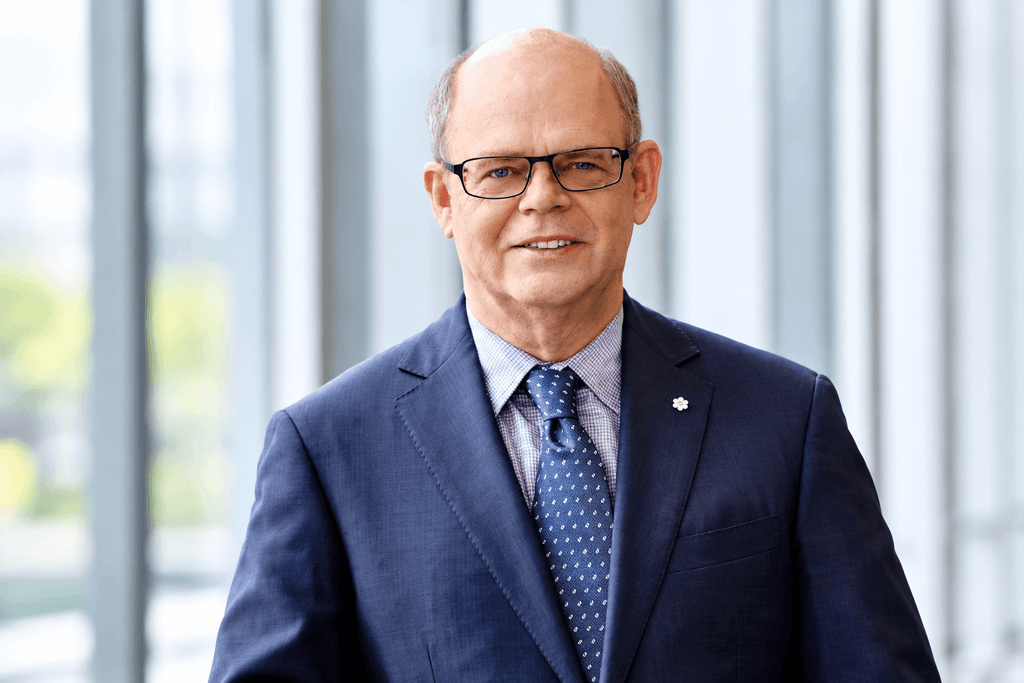
Fregin and Lazaridis co-founded Quantum Valley Investments (QVI) in March 2013, a venture capital fund focused on commercializing quantum computing, quantum sensing, and related deep-tech research, closely tied to the University of Waterloo’s quantum research institutes. Fregin has also personally funded Waterloo’s Quantum-Nano Centre.
He was also a founding donor behind the Perimeter Institute for Theoretical Physics, which launched in October 2000 on the strength of Lazaridis’s lead gift of over $100 million — at the time, roughly a third of his net worth, and the largest private donation in Canadian history. Fregin contributed $10 million to help establish the institute, matching a separate $10 million gift from fellow RIM figure Jim Balsillie.
In June 2022, the University of Waterloo awarded Fregin an honorary doctorate in engineering, recognizing more than 35 years of technical innovation spanning RIM’s founding, Quantum Valley Investments, and his ongoing funding support for quantum and nanotechnology research at the university.
According to Quantum Valley Investments’ own biography of him, Fregin has also dedicated significant time to African charitable initiatives, including establishing a vocational school in rural Uganda — a claim from his own fund’s materials that hasn’t been independently reported elsewhere, so it’s worth noting the source.
Personal Life
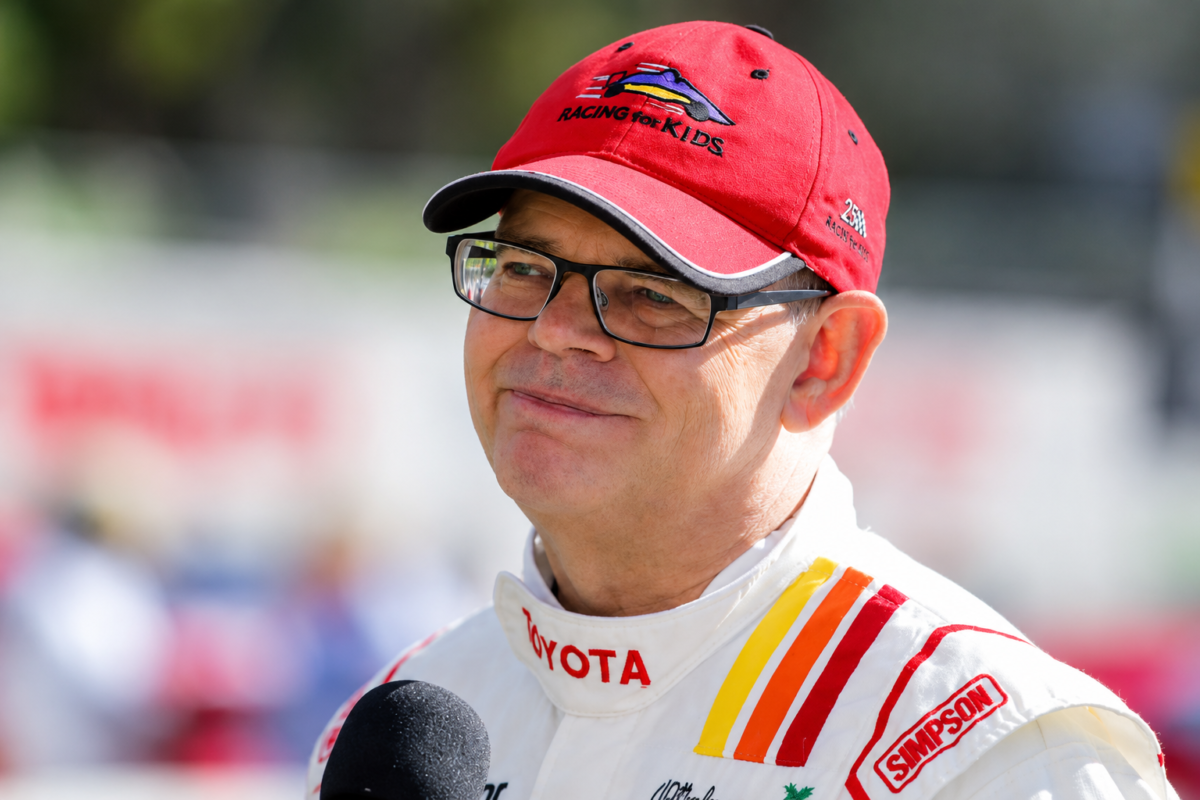
Fregin is widely described as deliberately low-profile and media-shy, both during his time at RIM and since. One documented personal interest: he’s a car enthusiast who has participated in Toyota’s charitable Pro/Celebrity Race. He was portrayed by Matt Johnson, who also directed, in the 2023 film BlackBerry. His current day-to-day whereabouts aren’t publicly documented, though his ongoing ties to Quantum Valley Investments, the Perimeter Institute, and the University of Waterloo suggest he’s remained connected to the Waterloo region.
Why He’s Less Known Than Lazaridis
Several factors explain the gap: Lazaridis was RIM’s public-facing president and later became Perimeter Institute’s lead benefactor and a vocal advocate for Canadian science policy, while Jim Balsillie (who joined as co-CEO in 1992) was the company’s other prominent public figure. Fregin’s role — Vice President of Operations — was an internal, hardware-focused position rather than a spokesperson role, and he retired in 2007 just before the media attention on BlackBerry intensified through its rise and later decline. A 2005 Canadian Business profile of him was literally titled “Douglas Fregin: The Other RIM Guy” — itself a telling sign of how he was already seen at the time.
FAQ
Who is Douglas Fregin? He’s the co-founder of Research In Motion (BlackBerry), who built the company’s early hardware alongside childhood friend Mike Lazaridis before retiring in 2007.
Is Douglas Fregin still involved with BlackBerry? Not operationally since his 2007 retirement, though he and Lazaridis jointly explored a buyout bid for the company in 2013.
What is Douglas Fregin’s net worth? His RIM stake was worth roughly $1.3-1.7 billion at his 2007 retirement; no reliable current figure is publicly documented.
What does Douglas Fregin do now? He co-runs Quantum Valley Investments, a venture fund focused on quantum technology, and has funded physics and quantum research through the Perimeter Institute and the University of Waterloo.
Where is Douglas Fregin from? Windsor, Ontario, Canada, where he met Mike Lazaridis in grade school.
Did Douglas Fregin go to the same university as Mike Lazaridis? No — Lazaridis studied at the University of Waterloo, while Fregin earned his electrical engineering degree at the University of Windsor.
Why isn’t Douglas Fregin as famous as Mike Lazaridis? Fregin held an internal, hardware-focused role at RIM rather than a public-facing one, and he retired in 2007 before the media attention on BlackBerry intensified.
Did Douglas Fregin donate to the Perimeter Institute? Yes — he gave $10 million as a founding donor alongside Lazaridis’s lead gift when the institute launched in 2000.
Sources: Wikipedia — Douglas Fregin, Wikipedia — BlackBerry Limited, Wikipedia — Perimeter Institute for Theoretical Physics, Wikipedia — DigiSync, Quantum Valley Investments — Doug Fregin, Academy of Motion Picture Arts and Sciences — 1999 Sci-Tech Awards, University of Waterloo — Honorary Degree Announcement, CTV News Kitchener — 2013 Buyout Bid, Windsor Public Library — Mike Lazaridis