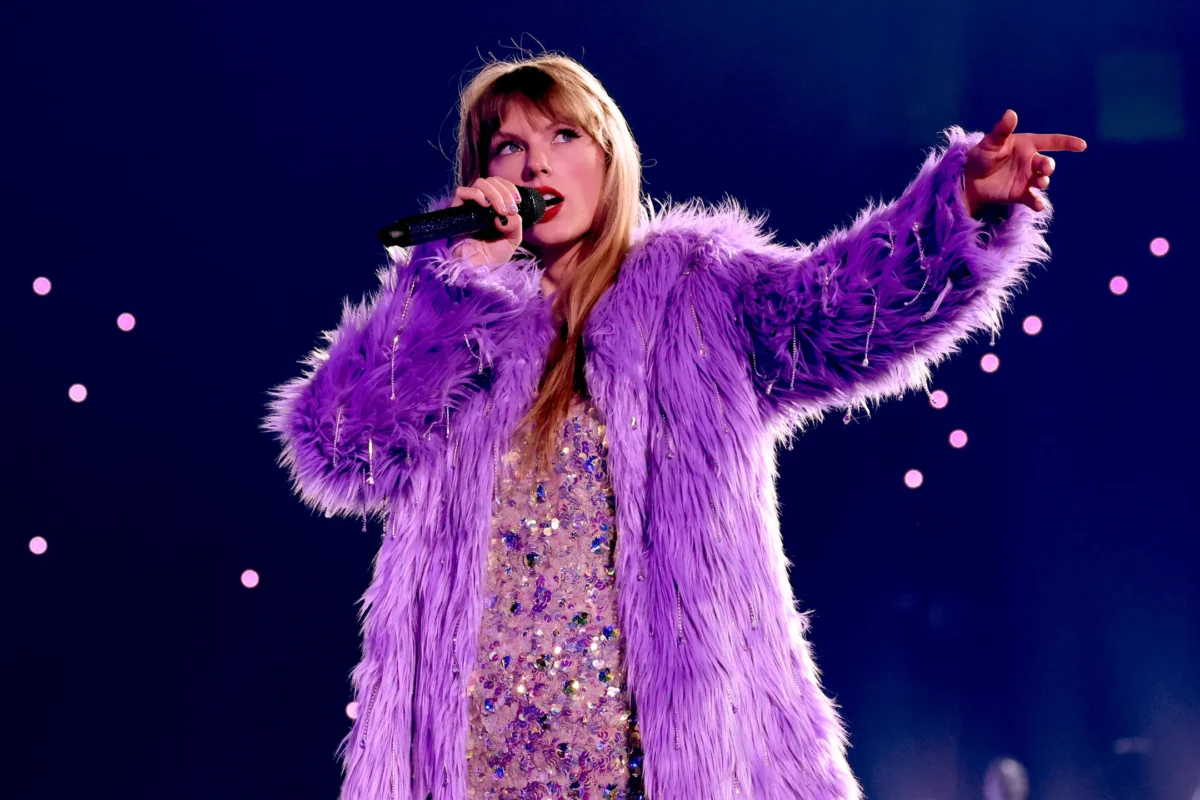

Taylor Swift’s relationship with the Billboard Hot 100 has entered a new phase in 2026, and the numbers back it up. Her track “I Knew It, I Knew You” claimed the number-one spot on the chart dated June 20, marking yet another chart-topper in a year that has already seen her repeatedly trade the top slot with herself. It’s the latest chapter in what industry watchers are calling one of the most complete chart takeovers of her career.
The run began early in the year with “The Fate of Ophelia,” which hit number one on January 10, giving Swift an immediate foothold at the top of the chart as 2026 opened. Weeks later, “Opalite” followed her back to number one on February 28, showing that the album cycle behind these singles had more than one hit in the tank. By the time “I Knew It, I Knew You” arrived at the summit in June, it was clear this wasn’t a one-song moment — it was a sustained campaign built on an album with genuine depth across its tracklist.
What’s driving the numbers. Unlike eras where a single breakout track carries an entire chart cycle, Swift’s 2026 run has been defined by multiple songs from the same project finding separate, extended chart life. That’s a difficult trick to pull off in an era of short attention spans and rapidly rotating playlists, and it points to a fanbase that engages with an entire album rather than a single lead single. Streaming consistency, physical and digital sales spikes tied to each single’s individual promotional push, and radio adds all appear to be working in tandem rather than in the usual staggered sequence.
The bigger competitive picture. Swift isn’t chart-topping in a vacuum. The same year has produced number-one runs from Bruno Mars, Harry Styles, BTS, Bad Bunny, Ariana Grande, Drake and Ella Langley, among others — a genuinely competitive Hot 100 landscape rather than one artist coasting. That makes her repeated returns to number one more notable, not less: she’s fending off a stacked field of the industry’s biggest current hitmakers release after release.
What it means for the rest of the year. With the VMAs approaching on September 27 and Swift among the most-nominated artists of the ceremony, her chart momentum is arriving right as the industry’s biggest live broadcast of the fall puts a spotlight back on this era of her career. A strong VMA showing — she’s positioned to potentially become the most-awarded artist in the show’s history with even a single additional win — would only add to a year that’s already been defined by chart records.
A promotional strategy built for longevity. Part of what’s kept the cycle alive is Swift’s approach to rolling out the era well past its initial release. Rather than front-loading all the attention into release week and moving on, she’s continued to give fans reasons to re-engage months later — from the recent trend of directly explaining lyric meanings to strategic single choices that spotlight different corners of the album rather than repeating the same handful of obvious hits. That kind of extended campaign is increasingly rare in an industry built around rapid content turnover, and it’s a meaningful part of why individual songs from the same project keep finding fresh chart life months apart.
What other artists can learn from it. Labels and artist teams studying Swift’s 2026 run are likely to take away a simple lesson: chart longevity isn’t just about a strong opening week anymore, it’s about sustaining a narrative around an album long enough for multiple singles to each get their own moment. That requires both a genuinely deep tracklist and a fanbase willing to keep re-engaging — two things that are difficult to manufacture, but that Swift’s team has clearly built over years of consistent, high-quality output.
For fans keeping score, the throughline is simple: an artist at the height of her commercial powers, backed by an album deep enough to keep producing hits well into its second half of the year. Whether “I Knew It, I Knew You” ends up being the final number-one of this cycle or simply the latest, it’s already secured its place in one of the most dominant chart years of Swift’s career.