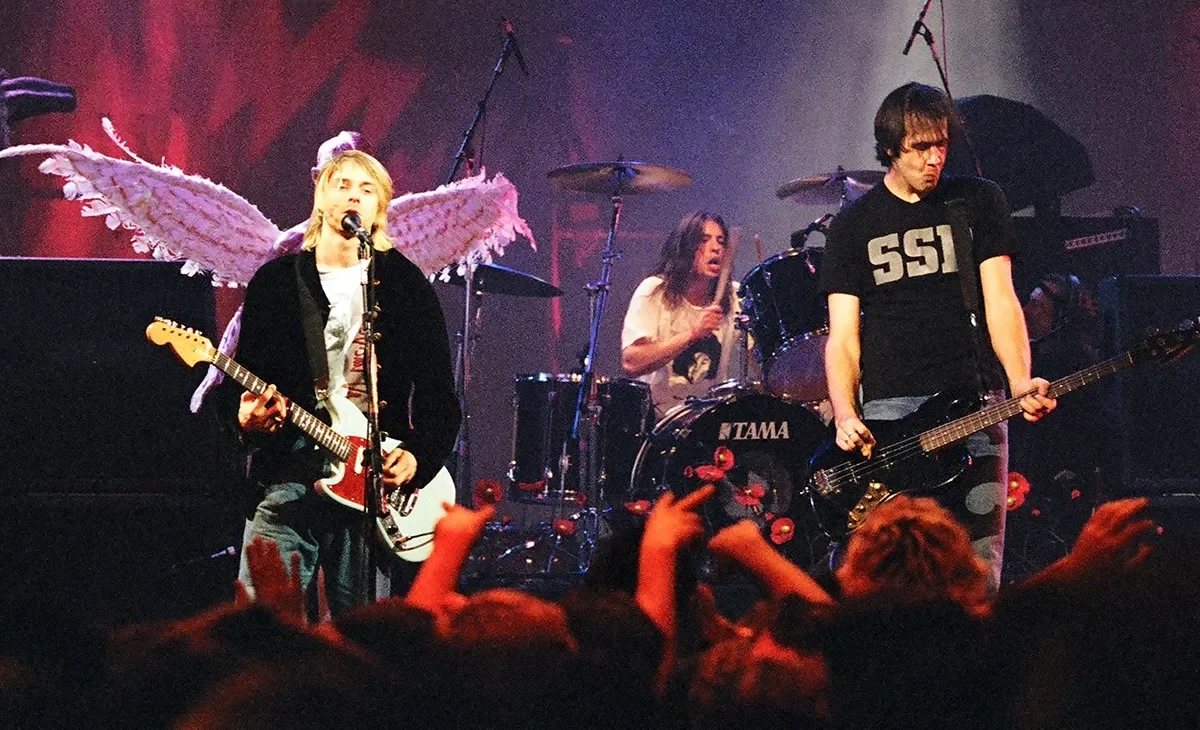

More than three decades after breaking through with “Smells Like Teen Spirit,” Nirvana has been named the recipient of MTV’s Video Vanguard Award at the 2026 MTV Video Music Awards, set to air live on CBS on September 27 from the Peacock Theater in Los Angeles. It’s one of the most significant legacy honors MTV hands out each year, and for a band whose story ended tragically young, it’s an acknowledgment that their influence never actually stopped growing.
What the Video Vanguard Award represents. Since its introduction, the award has been reserved for artists whose work fundamentally changed the direction of music video and popular culture — previous recipients include some of the most consequential names in the format’s history. Honoring Nirvana places the band in that same conversation, recognizing not just a handful of iconic videos but the way the band’s entire aesthetic — raw, unpolished, deliberately anti-spectacle — became its own influential visual language.
Why now. Nirvana’s catalog has never really left the cultural conversation, but 2026’s honor arrives at a moment when grunge and 90s alternative influence is audibly present across a new generation of rock and even rap-adjacent acts sampling that era’s rawness. Awards shows often use legacy honors to connect a current audience back to the artists who made today’s sound possible, and few bands offer a cleaner throughline from 1991 to now than Nirvana.
A complicated legacy, handled carefully. Any major honor for Nirvana inevitably touches on the band’s abbreviated run and the loss of Kurt Cobain in 1994. MTV’s recognition frames the award around the band’s body of work and its visual and sonic impact rather than treating the ceremony as a retrospective on loss — a distinction that surviving members and the band’s estate have generally favored in how the group’s legacy gets presented publicly.
What to expect from the ceremony moment. Video Vanguard honors are typically paired with a career-spanning visual retrospective during the broadcast, often featuring tributes from current artists who cite the honoree as a direct influence. Given how frequently Nirvana comes up as a reference point across genres right now, expect the tribute segment to reach well beyond straightforward rock acts.
Where it fits in a stacked VMA year. Nirvana’s honor lands in a ceremony already generating headlines for Madonna’s leading haul of nominations and Taylor Swift’s continued chart dominance. That the show is using one of its biggest legacy platforms to spotlight a band that never had the chance to attend an MTV Video Music Awards ceremony as active nominees adds an unusually reflective note to an otherwise starry night.
Grunge’s fingerprints on 2026’s biggest sounds. Listen closely to a wide swath of this year’s rock, alternative and even some rap-adjacent releases, and Nirvana’s DNA is hard to miss — stripped-down production choices, deliberately unpolished vocal takes, and a general suspicion of overly slick studio perfection that traces directly back to the band’s early-’90s aesthetic. That lasting sonic fingerprint is a big part of why the Video Vanguard committee’s choice reads as more than a nostalgia play; it’s a recognition of a sound that current artists are still actively drawing from, whether or not they grew up during Nirvana’s original run.
How the band’s estate has handled the honor. Awards of this scale for artists who are no longer actively performing typically involve close coordination with an estate or surviving members to ensure the tribute reflects how the band’s legacy is meant to be represented. That careful handling has generally shaped how Nirvana-related honors get produced for television, with an emphasis on celebrating the music and its reach rather than reducing the moment to a single narrative about loss.
For a generation of fans who grew up with Nirvana only through streaming and reissues rather than MTV’s original heyday, the Video Vanguard Award is also an introduction — a reminder, delivered on one of music’s biggest annual stages, of exactly how far-reaching three decades of influence can travel.